Mixed Notes: A Bouncy Display Font for Festive Projects
When you're working on a project that needs personality, the typeface you choose can make or break the final result. Some designs call for something serious and structured. Others need a font that feels alive—something with energy, warmth, and a sense of fun. Mixed Notes is that kind of font. It's a bouncy, cute display font designed to bring a festive, playful, and cheerful vibe to a wide range of creative work. Whether you're designing a t-shirt, crafting stickers, creating quotes for social media, or putting together sublimation designs, Mixed Notes offers a distinct personality that stands out without trying too hard.
What Makes Mixed Notes Visually Distinctive
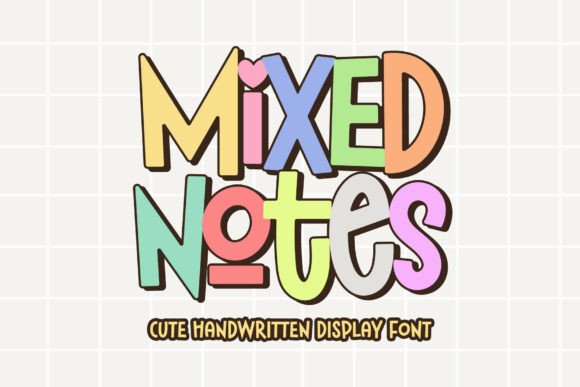
At its core, Mixed Notes is a display typeface, which means it's built for impact rather than long-form reading. The letterforms have a bouncy baseline—characters don't sit in a perfectly straight line, giving the text a hand-lettered, organic quality. This slight irregularity is what gives the font its charm. It feels like someone wrote it with genuine enthusiasm, not like a machine stamped it out.
The strokes are rounded and soft, with a consistent weight that keeps the text legible even at smaller sizes for a display font. There's a sweetness to the curves, a playful rhythm in how the letters connect and flow. It doesn't lean too heavily into any single style—it's not purely a handwritten font, nor is it a traditional script font. It sits in a sweet spot that borrows from both worlds while maintaining its own identity. The overall aesthetic is modern without being cold, cute without being childish.
This balance is important. A lot of playful fonts cross the line into looking juvenile or unprofessional. Mixed Notes manages to feel approachable and fun while still looking polished enough for commercial use. That's a difficult line to walk, and it's one of the reasons this premium font works so well across different contexts.
Where Mixed Notes Works Best
Display fonts live or die by context. A typeface that looks fantastic on a birthday card might fall flat on a business card. Mixed Notes thrives in projects where personality and warmth are priorities. Here's where it tends to shine:
- T-shirt and apparel design: The bouncy lettering translates well to garments, especially for casual, lifestyle, or event-based apparel. It reads well from a distance and adds a friendly tone to slogans and quotes.
- Stickers and crafting projects: For crafters and hobbyists, Mixed Notes is a natural fit. Its rounded, cheerful forms work beautifully on die-cut stickers, planner labels, and handmade goods.
- Sublimation and tumblers: Sublimation designs need fonts that hold up when printed on curved or textured surfaces. The bold, clear shapes in Mixed Notes make it a reliable choice for drinkware, coasters, and similar products.
- Social media graphics: If you're creating Instagram posts, Pinterest pins, or TikTok overlays, this font grabs attention without feeling aggressive. It pairs well with photos and illustrations, especially in lifestyle, food, and family-oriented content.
- Packaging design: For brands with a playful identity—think bakeries, children's products, or artisan goods—Mixed Notes can add a handcrafted feel to labels and boxes.
- Logo design and brand identity: While not suited for every brand, businesses targeting a younger or more casual audience can use Mixed Notes as part of their visual identity. It works particularly well as a secondary or accent typeface paired with a clean sans serif font.
- Editorial and publishing: Magazine headers, blog post titles, and chapter openers can benefit from the energy Mixed Notes brings. It's less suited for body copy but excellent for pulling readers into a section.
The key is matching the font's personality to the project's tone. Mixed Notes isn't trying to be everything. It knows what it is—a creative font with a specific mood—and it excels when that mood aligns with the design goals.
How a Font Like Mixed Notes Shapes Audience Perception
Typography influences how people feel about what they're reading, often without them realizing it. A serif font might signal tradition and authority. A geometric sans serif suggests modernity and efficiency. And a display font like Mixed Notes communicates approachability, joy, and creativity.
When someone sees Mixed Notes on a product or in a social media post, they're absorbing more than the words. They're picking up on the visual tone. The bouncy rhythm suggests playfulness. The rounded forms feel safe and welcoming. This emotional layer is what makes typography such a powerful tool in brand identity and marketing.
For small business owners and entrepreneurs, this matters. If your brand speaks to parents, pet owners, crafters, or anyone who values a warm, personal touch, Mixed Notes can reinforce that positioning. It tells your audience, "We're approachable. We're fun. We care about the details." That kind of nonverbal communication builds trust and recognition over time.
Practical Tips for Using Mixed Notes Effectively
Choosing a font is only the first step. Using it well requires some thought. Here are a few practical considerations when working with Mixed Notes:
- Evaluate project fit first. Before downloading any design assets, ask yourself whether the font's personality matches your project. Mixed Notes is versatile within its lane, but it's not the right choice for a law firm's annual report or a minimalist tech startup's website. Respect the font's strengths.
- Test font pairings carefully. Mixed Notes works well alongside clean, neutral typefaces. Try pairing it with a straightforward sans serif font for body text or a simple serif font for contrast. The goal is balance—let Mixed Notes be the star while its partner keeps things grounded.
- Check readability at your intended size. Display fonts are designed for headlines and short text, not paragraphs. Use Mixed Notes for titles, headers, callouts, and short phrases. If you need to convey longer messages, pair it with a more readable typeface for the supporting text.
- Review the included styles and characters. Before starting your design, explore the full character set. Many premium fonts include alternates, ligatures, or multilingual support that can add variety and polish to your work. Knowing what's available helps you make the most of the font.
- Understand the licensing terms. If you're using Mixed Notes for commercial projects—selling t-shirts, creating client work, or publishing products—make sure the license covers your intended use. Most commercial font licenses are straightforward, but it's worth confirming before you commit.
- Don't overdo it. One of the most common mistakes with expressive fonts is using them everywhere. Mixed Notes makes a strong impression in small doses. Use it strategically for maximum impact, and let simpler typography handle the rest.
Finding the Right Creative Balance
Good design is about making intentional choices. Every font carries a voice, and Mixed Notes speaks with warmth, energy, and a sense of celebration. It's a modern typography choice that doesn't take itself too seriously—but that doesn't mean it shouldn't be taken seriously as a design tool.
For designers, marketers, bloggers, and creators who need a creative font that brings personality to their work, Mixed Notes is worth exploring. It fills a specific niche in the world of web design, packaging design, and social media graphics with confidence and charm. The trick is knowing when to reach for it—and when to let something else take the lead.
Experiment with it. Test it against your existing brand palette. See how it feels next to your photography and illustrations. Typography is one of the most personal decisions in any design project, and finding the right fit takes a bit of trial and error. But when a font clicks with a project, you feel it immediately. Mixed Notes has a way of doing exactly that—bringing a smile to the design process and, more importantly, to the people who see the finished work.