Retro Funky: Your Go-To Typeface for Bold, Nostalgic Vibes
More Than Just a Font: Capturing a Vibe
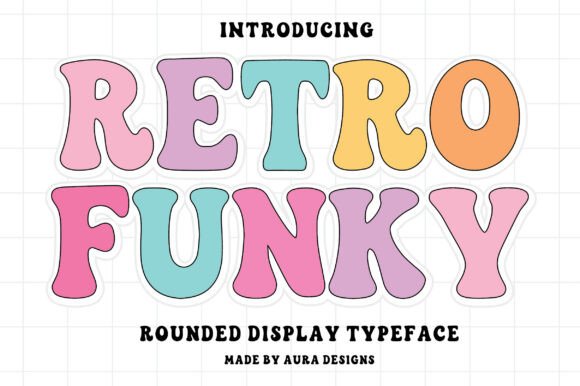
There's a specific feeling you get when you see a design that just clicks. It’s not about being the most minimalist or the most technically perfect. Sometimes, it’s about personality. That’s the core of Retro Funky, a premium font that doesn’t just sit on the page—it performs. This display font is a direct descendant of the bold, rounded aesthetics of the 70s and 80s, but it’s been tuned for the modern creative toolkit. It’s chunky, it’s smooth, and it carries a built-in sense of fun that’s hard to ignore.
Forget the thin, delicate serifs or the stark, corporate sans serifs for a moment. Retro Funky lives in a different space. Its letterforms are built with thick, confident strokes and softened corners, creating a visual weight that feels both substantial and approachable. The "funky" part isn’t just a label; it’s in the subtle curves and the playful rhythm of the characters. It’s a typeface that communicates nostalgia without feeling dated, and energy without being chaotic. For anyone working on a project that needs to pop off the screen or the shelf, this is a foundational design asset.
Where Does a Typeface Like This Shine?
Knowing what a font is and knowing where to use it are two different things. The strength of Retro Funky lies in its versatility within a specific, high-energy niche. It’s not for your corporate annual report, but it’s perfect for the projects where you want to grab attention and hold it.
- Logo Design & Brand Identity: For brands in the food & beverage, music, entertainment, or lifestyle spaces, Retro Funky can become the cornerstone of a memorable brand identity. Think of a craft soda label, a vintage-inspired clothing tag, or the logo for a podcast about classic cartoons. Its inherent character does a lot of the heavy lifting in conveying brand personality.
- Marketing & Social Media Graphics: In the endless scroll of a social feed, a creative font like this is your first line of offense. Use it for Instagram story headers, YouTube thumbnail text, or sale announcements that need to feel urgent and exciting. Its high legibility at larger sizes makes it ideal for short, impactful calls to action.
- Packaging Design & Merchandise: This is where Retro Funky truly excels. On a t-shirt, a sticker, a poster, or product packaging, the font’s bold curves and textured feel translate beautifully. It’s designed to be touched as much as read, giving physical products a tactile, nostalgic quality that resonates with consumers.
- Editorial & Web Design: Use it sparingly but effectively in editorial design. A chapter title in a magazine, a pull-quote in a blog post, or a hero banner on a web design project can benefit from its distinctive presence. Paired with a clean, neutral body font, it creates a dynamic and engaging visual hierarchy.
Practical Guidance for Using Retro Funky Effectively
Adopting a new typeface is a strategic choice. Here’s how to evaluate and implement Retro Funky to ensure it works for your project, not against it.
Evaluating Fit and Font Pairing
The first step is always context. Does the playful, bold character of Retro Funky align with your project’s goals and audience? If you’re designing for a financial tech startup, it’s probably not the right fit. If you’re creating a logo for a roller disco or branding for a snack company, it’s a strong contender.
No display font is an island. Font pairing is critical. The thick, rounded nature of Retro Funky demands a partner that provides contrast and readability in longer text. You’d typically pair it with a simple, clean sans serif font or a straightforward serif font for body copy. Avoid pairing it with another highly stylized script font or handwritten font, as they will compete for attention. The goal is to let Retro Funky be the star of headlines and logos, while its partner handles the supporting information clearly.
Readability, Styles, and Licensing
As a display font, Retro Funky is optimized for impact at medium to large sizes. Use it for headlines, titles, and short phrases. Avoid setting entire paragraphs in it, as the bold weight that makes it so eye-catching can reduce readability in body text. Always test it at the actual size it will appear in your final design—what looks great on your 27-inch monitor might feel overwhelming on a mobile screen.
Check the font’s included styles. Does it come with multiple weights (like Regular, Bold, Outline)? Does it have a full set of punctuation, numerals, and multilingual characters? These details determine its flexibility. For instance, an outline version could be perfect for creating layered effects in logo design or posters.
Finally, understand the licensing. If this is for a personal hobby project, a personal license may suffice. However, for any commercial font use—client work, products for sale, or business marketing—you need to ensure you have the correct commercial license. This protects you legally and supports the type designers who created the asset.
In the crowded world of modern typography, Retro Funky