Brown Fox Lazy Dog: A Playful Single Line Font for Modern Makers
More Than Just a Cute Name
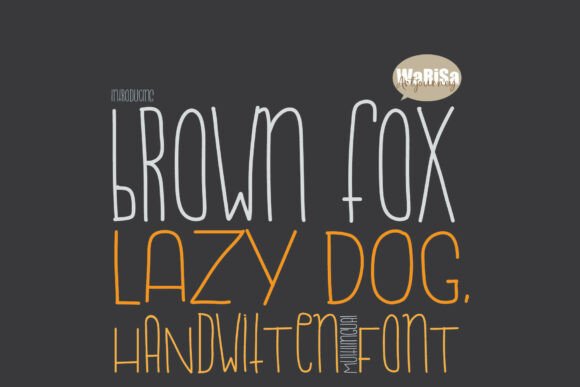
The name Brown Fox Lazy Dog immediately conjures a specific image: something friendly, approachable, and slightly whimsical. This isn't a coincidence. This typeface is designed to embody that exact feeling. Visually, it's a single line font, also known as a monoline or sketch font. Each character is drawn with a consistent, thin stroke, creating a clean and minimalist appearance. The style is unmistakably handwritten, but with a controlled, legible flow. It avoids the chaotic energy of a true scrawl, opting instead for a playful and cute personality that feels personal yet polished. The letterforms have a gentle bounce, with rounded edges and subtle variations that mimic the natural pressure of a pen on paper. This isn't a script font in the traditional, cursive sense; it's a more modern, disconnected handwriting style that prioritizes clarity and charm.
The Practical Power of a True Single Stroke
For anyone using a Cricut, Silhouette, or plotter, the distinction between a standard font and a genuine single-stroke font is critical. Most fonts are designed for printing, where the software fills in the outlines to create a solid shape. When you try to use these for drawing or sketching, your machine will trace the outer contour, resulting in a frustrating double line. Brown Fox Lazy Dog solves this. It is engineered as a monoline design, meaning the path itself is the final stroke. This translates to flawless performance with your machine's Draw/Sketch feature or sketch pens. The result is a clean, single line that looks professionally hand-drawn, saving you time and material while delivering a superior finish.
Where This Font Truly Shines
Its strengths are most apparent in projects where a human touch adds significant value. Think of greeting cards where a personal message is paramount, or gift tags that need to feel special. It's perfect for invitations to casual events, baby showers, or birthday parties. Beyond paper, this font excels in crafting applications. Use it for vinyl decals on planners or water bottles, for adding witty phrases to T-shirts, or for creating layered elements in scrapbooking. Its clean line also makes it a candidate for engraving on jewelry or keychains, and for foil transfers on metal blanks, where a thin, precise stroke is essential.
Strategic Applications Beyond the Craft Room
While born from the crafting world, the appeal of a font like Brown Fox Lazy Dog extends into professional design. As a display font, it can inject personality into specific elements. Imagine it used for pull quotes in editorial design, for product names on artisan packaging, or for call-to-action phrases in social media graphics. Its playful nature makes it ideal for brands targeting a younger, more casual audience. A small business owner could use it for their logo design to appear approachable and creative. It can be a powerful component of a brand identity for a bakery, a children's boutique, or a handmade goods shop. The key is using it strategically for headlines or accents, not for body text, where its handwritten style could hinder readability at small sizes.
Making the Right Choice for Your Project
Choosing any premium font or design asset requires a thoughtful evaluation. First, assess the project's tone. Brown Fox Lazy Dog communicates warmth, creativity, and informality. It would clash with a project requiring serious, corporate, or highly traditional aesthetics. Next, consider font pairing. It works beautifully with clean, neutral sans serif or serif fonts for body text. A simple geometric sans serif can provide a modern counterbalance, while a classic serif can ground its whimsy. Always test the font in context. Check the readability of your intended message at the size you'll use it. Review all included styles—does it have the weights, numerals, and punctuation you need? Finally, understand the licensing. For commercial use, such as on products for sale, ensure you have the appropriate commercial license. This font isn't just a tool; it's a piece of your project's communication strategy, and using it correctly ensures your work looks intentional and professional.